
IFRS & IAS 🌐 Global IFRS
IFRS 18 Classification: The Operating, Investing & Financing Categories
Part 2 of the IFRS 18 series: the detailed classification rules for the three categories that require real judgement, the special rules for lenders and investment entities, and a worked example.
Quick Summary
- Every income and expense item must be classified into one of five IFRS 18 categories; operating, investing, and financing require real judgement.
- The operating category is the default/residual classification for anything not specifically required elsewhere.
- The investing category covers returns that are individually and largely independent of an entity’s other resources, such as associate income, investment property, and most interest income.
- The financing category has two groups: liabilities raised to finance the business, and the unwinding of a discount on other liabilities such as provisions and pensions.
- Entities whose main business is investing or lending classify that activity’s income and expenses as operating, not investing or financing.
- Foreign exchange differences follow the classification of the underlying item they relate to.
IFRS 18 Presentation & Disclosure Series — Part 2 of 8
Part 1: Fundamentals & Overview | Part 2: The Three P&L Categories | Part 3: New Required Subtotals | Part 4: Expenses by Nature vs Function | Part 5: Management-Defined Performance Measures | Part 6: Aggregation & Disaggregation | Part 7: Cash Flow Statement Changes | Part 8: Transition & First-Time Adoption
Why Classification Is the Foundation of IFRS 18
IFRS 18 requires every single item of income and expense recognised in the statement of profit or loss to be classified into one of five categories: operating, investing, financing, income taxes, and discontinued operations. This classification step happens before any subtotal can be calculated, so getting it right is the foundation the rest of the standard is built on. This article focuses on the three categories that require genuine classification judgement — operating, investing, and financing — since income taxes and discontinued operations largely follow existing IAS 12 and IFRS 5 requirements.
Part 1 of this series introduced these categories at a high level. Here we go through the actual classification rules, including the special cases that trip up preparers, and finish with a worked example.

The Operating Category: The Default Classification
The operating category is defined residually — it is where an income or expense item is classified by default, unless IFRS 18 specifically requires or permits classification elsewhere. In practice this means:
- All income and expenses from an entity’s main revenue-generating activities — revenue, cost of sales, distribution costs, administrative expenses, most impairment charges, and similar core trading items.
- Any item that does not meet the specific definitions of the investing or financing categories, even if it looks unusual or one-off (for example most restructuring costs and most litigation provisions).
- For an entity whose main business activity is investing in assets, or providing financing to customers, income and expenses from that main activity are classified as operating rather than investing or financing — see the special entity types below.
The operating profit subtotal (covered in full in Part 3) is simply the total of everything classified here, so the residual, catch-all nature of this category is what makes that subtotal meaningful and comparable — very little is left for management discretion.
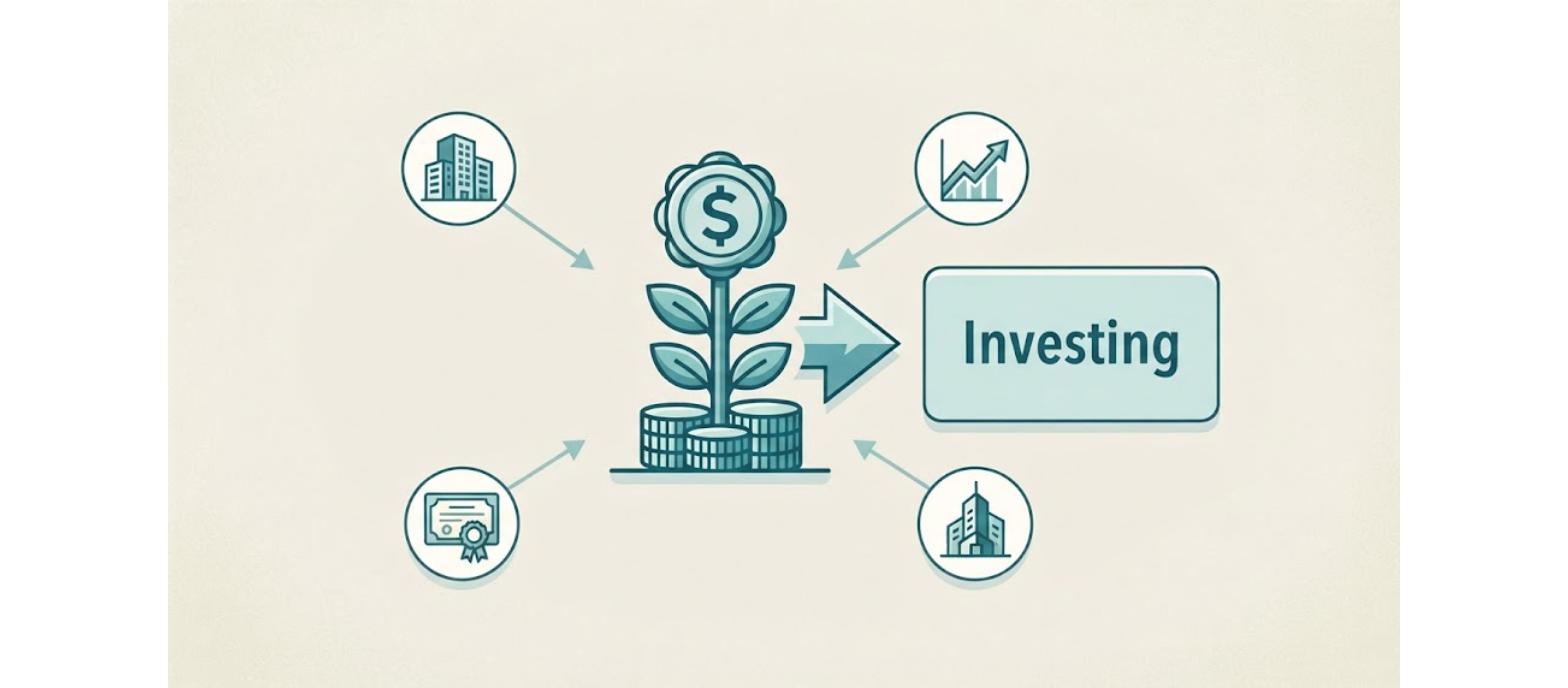
The Investing Category: Returns Largely Independent of Other Resources
The investing category captures income and expenses from assets that generate a return individually and largely independently of an entity’s other resources. IFRS 18 gives specific examples that fall here for most entities:
- Income and expenses from investments in associates, joint ventures, and unconsolidated subsidiaries accounted for using the equity method — share of profit or loss, and any related impairment.
- Income from investment property, including fair value gains and losses for property carried under the fair value model.
- Dividend income and gains or losses on disposal of equity investments held for their investment return rather than as part of core operations.
- Interest income on cash, short-term investments, and other financial assets — except where the entity’s main business is providing financing (see below), in which case this moves to operating.
The unifying idea is independence: a factory generates returns only in combination with the rest of the business (labour, inventory, distribution), so it is operating. A passive shareholding in another company, or a rental property held purely for investment return, generates a return on its own, so it is investing.
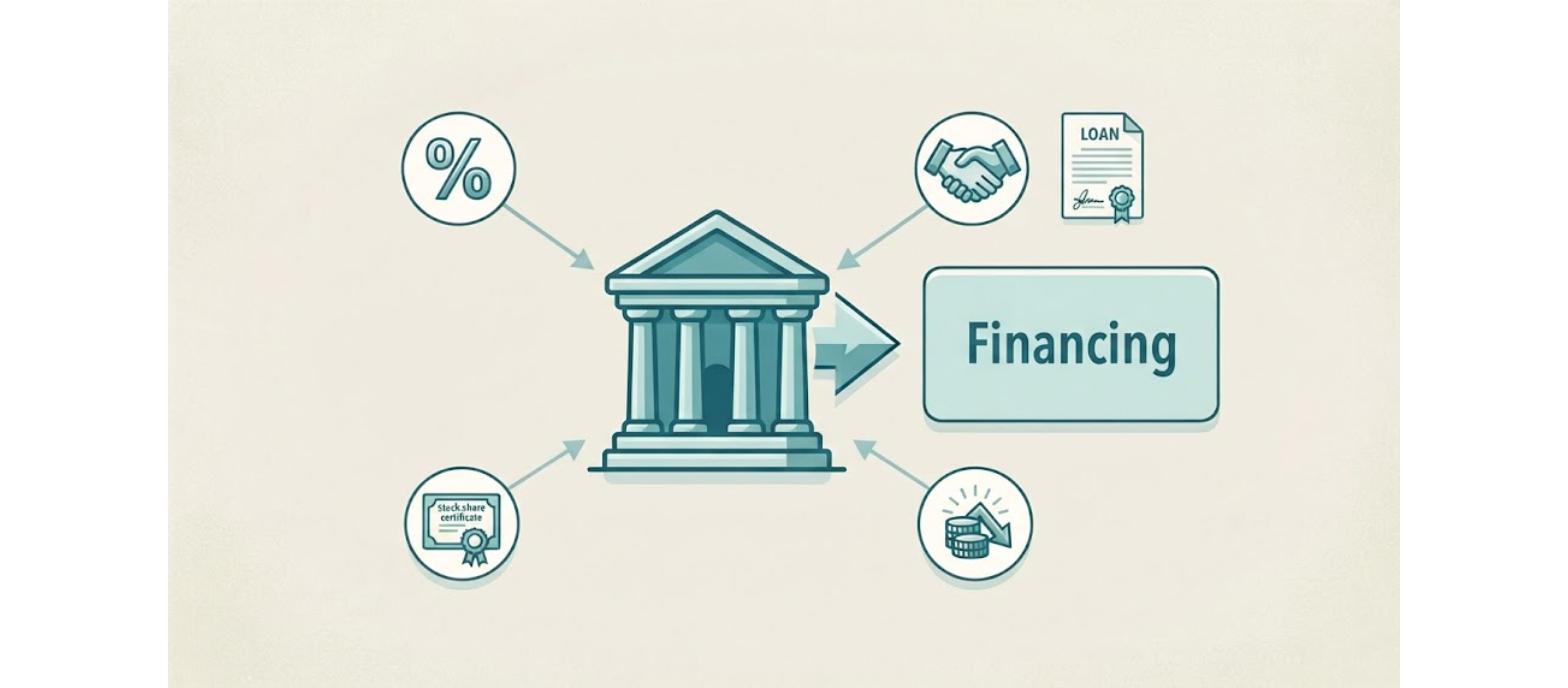
The Financing Category: The Cost of Raising Capital
The financing category is narrower than many preparers expect. IFRS 18 splits it into two distinct groups of items:
Group 1 — Liabilities From Transactions That Raise Finance
Interest expense and other costs on liabilities whose sole or main purpose is to raise finance — bank loans, bonds and other debt instruments, and lease liabilities under IFRS 16. This is the classification most preparers already expect.
Group 2 — The Unwinding of a Discount on Other Liabilities
This is the part that catches many preparers out. IFRS 18 also requires the financing category to include the unwinding of a discount recognised on liabilities that were not raised to finance the entity — for example the accretion of a discounted provision (such as a decommissioning or restoration provision) or the interest cost component of a defined benefit pension obligation. Even though the underlying liability is not a financing arrangement, the time-value-of-money charge that unwinds each period is still financing in nature under IFRS 18, and must sit in this category rather than operating.
Foreign exchange differences are classified according to the category of the item they relate to — an FX gain or loss on a trade payable is operating, while one on foreign-currency borrowings is financing.
Special Classification Rules for Two Types of Entities
IFRS 18 recognises that “investing” and “financing” income can, for some businesses, actually be the core operating activity rather than a side activity. Two specific carve-outs apply:
- Entities whose main business activity is investing in assets (for example certain investment entities, real estate businesses, or asset-holding vehicles) classify the income and expenses from that main investing activity as operating, not investing — because for them it is not a side activity, it is the business itself.
- Entities whose main business activity is providing financing to customers (for example banks and other lenders) classify interest income and expense arising from that lending activity as operating, not financing or investing.
Determining whether an entity has one of these “main business activities” requires judgement based on facts such as how the business is described to investors, how performance is monitored internally, and the materiality of the activity relative to the entity as a whole — it is not simply an accounting policy election.
Worked Example: Classifying a Simple Income Statement
Consider a manufacturing company (not a bank or investment entity) with the following items in a reporting period:
- Revenue from product sales, cost of sales, and administrative expenses → Operating (core business).
- Share of profit from a 30%-owned associate → Investing (equity-accounted return, independent of core operations).
- Interest expense on a five-year bank term loan → Financing (Group 1 — raised to finance the business).
- Unwinding of the discount on a long-service decommissioning provision → Financing (Group 2 — discount unwind, even though the provision itself is operating in nature).
- Interest income on surplus cash held on deposit → Investing (return on a financial asset, entity is not a lender).
- Fair value gain on an investment property held for rental yield → Investing (return independent of manufacturing operations).
- Foreign exchange loss on trade receivables from export customers → Operating (relates to an operating item).
Notice that only two of these seven items land in financing, and the decommissioning provision unwind — something many preparers currently leave in operating expenses under IAS 1 — must move to financing under IFRS 18. This kind of reclassification is exactly the type of chart-of-accounts and mapping work finance teams need to plan for ahead of the 2027 effective date.
Common Classification Mistakes
- Assuming all interest income is investing. For an entity whose main business is providing financing, interest income is operating, not investing.
- Leaving discount-unwind charges in operating expenses. The unwinding of a discount on provisions and pensions must move to the financing category under IFRS 18, even though the underlying liability is operating in nature.
- Treating the investing/financing carve-outs as elective. Whether an entity’s main business activity is investing or lending is a matter of fact and judgement, not an accounting policy choice.
- Classifying all FX gains and losses the same way. Foreign exchange differences follow the category of the underlying item, so a single FX line often needs to be split across categories.
- Forgetting equity-accounted results. Share of profit or loss from associates and joint ventures sits in the investing category, not operating, for most entities.
Get Your Chart of Accounts Ready for IFRS 18
Reclassifying every income and expense line into the new categories is a mapping exercise best started early. SABIO Consultancy can help build your IFRS 18 classification map ahead of the 2027 effective date. Talk to our IFRS specialists →