
UAE Corporate Tax and Free Zone Compliance
A practical guide to the UAE’s 9% corporate tax rate, the time-limited Small Business Relief window, and the Free Zone qualifying income rules that determine whether a company keeps its 0% rate.
- Every UAE business pays 0% corporate tax on its first AED 375,000 of taxable income in any tax period; the standard 9% rate applies only above that threshold.
- Small Business Relief lets businesses with revenue at or below AED 3 million elect zero corporate tax entirely — but this relief is scheduled to expire December 31, 2026.
- Qualifying Free Zone Persons (QFZPs) can keep a 0% rate indefinitely on qualifying income: transactions with other free zone entities, manufacturing, and qualifying international transactions with non-UAE persons.
- A Free Zone company loses its QFZP status — and becomes subject to 9% tax on ALL income for 5 years — if non-qualifying revenue exceeds the lower of AED 5 million or 5% of total revenue.

Scope & Objective
This guide is a companion to our general UAE Company Registration and Corporate Compliance guide, and focuses specifically on how UAE Corporate Tax (introduced under Federal Decree-Law No. 47 of 2022) applies once your company is up and running. Every UAE-incorporated business, including most Free Zone entities, is now within the corporate tax regime — the question isn’t whether it applies, but how much tax is actually owed and which registration and filing obligations follow.
The 9% Rate and the AED 375,000 Threshold
The headline structure is simple: 0% on the first AED 375,000 of taxable income in a tax period, and 9% on taxable income above that threshold. There is no exemption from registration — even a company that expects to owe nothing because it stays under the threshold must still register for Corporate Tax with the Federal Tax Authority (FTA) and file an annual return. Taxable income is calculated from accounting profit with specific adjustments (e.g. for exempt income, disallowed expenses, and transfer pricing adjustments on related-party transactions), not simply pulled from your bookkeeping software.
Registration deadlines are tied to your licence issue date and are enforced with fixed penalties (AED 10,000 for late registration), so this is not a filing to leave until year-end. Once registered, the annual Corporate Tax return and payment are due within 9 months of the end of the relevant tax period — for most companies running a calendar-year period, that means a filing deadline of September 30 the following year.
Small Business Relief: A Time-Limited Window
Small Business Relief is an elective simplification, not a permanent exemption: a resident person with revenue at or below AED 3,000,000 in the relevant and all prior tax periods can elect to be treated as having no taxable income, removing the need to calculate taxable income in detail. The catch is timing — this relief is only available for tax periods ending on or before December 31, 2026. Businesses currently relying on it should be planning now for what their tax position looks like once the relief window closes, not treating it as indefinite.
Free Zone companies have their own path: a Qualifying Free Zone Person (QFZP) can maintain a 0% rate indefinitely, but only on “qualifying income” — a defined list that includes transactions with other Free Zone persons, income from qualifying intellectual property, and qualifying international transactions with parties outside the UAE. Income from most transactions with mainland UAE customers falls outside this list and is taxed at the standard 9% rate, so the free zone benefit is narrower than many company owners assume.

Free Zone Qualifying Income and the 5% Trap
The rule that catches Free Zone companies off guard is the non-qualifying revenue threshold: a QFZP that earns non-qualifying revenue exceeding the lower of AED 5,000,000 or 5% of its total revenue in a tax period loses its QFZP status entirely — and not just for that period. The consequence is a 5-year disqualification during which the company is taxed at the standard 9% rate on ALL of its income, qualifying and non-qualifying alike. A single overlooked mainland invoice can be the difference between a 0% and a 9% tax position for half a decade.
Because of how steep that penalty is, Free Zone businesses should track non-qualifying revenue against the threshold continuously through the year, not just at filing time — by the time an accountant catches a breach during annual close, the disqualification has often already been locked in for the period in which it happened.
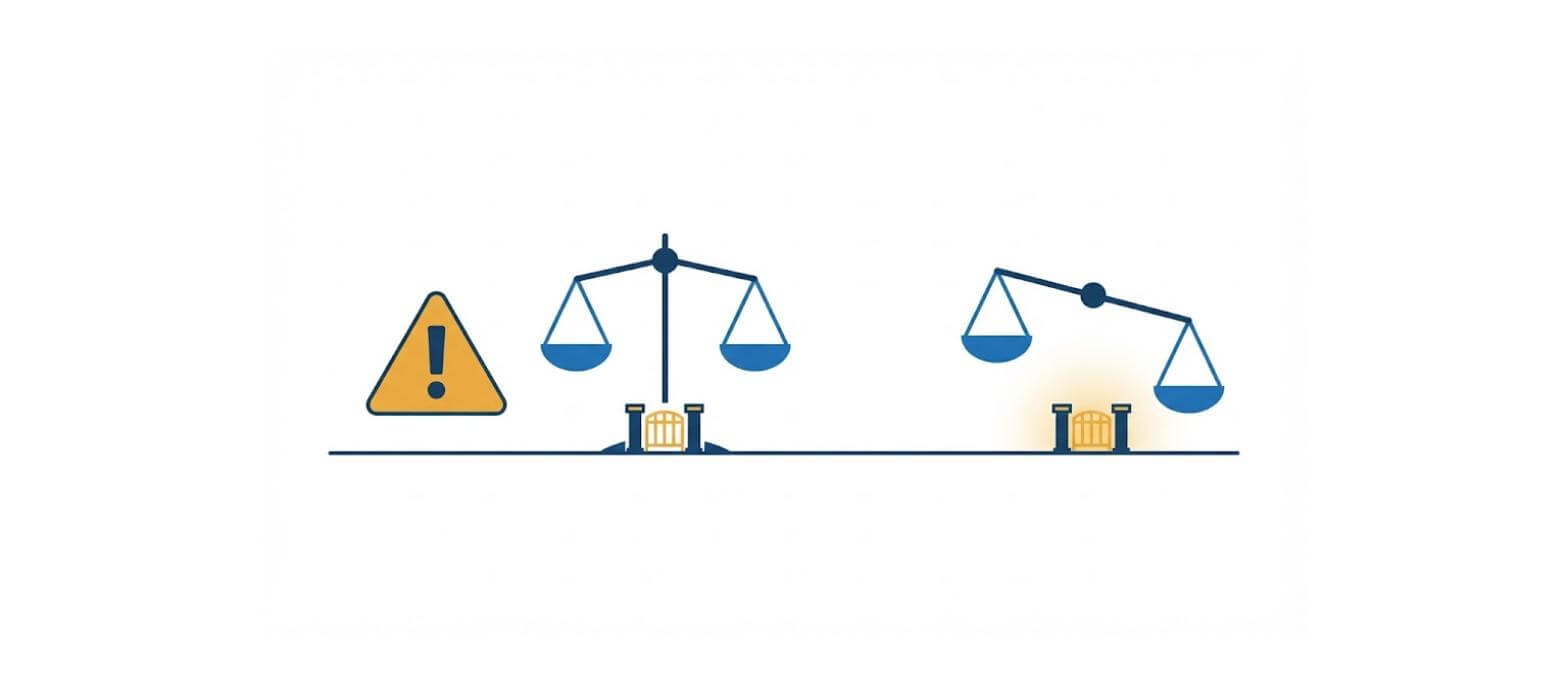
A single mainland invoice can silently end a Free Zone company’s 0% tax rate: if non-qualifying revenue crosses the lower of AED 5,000,000 or 5% of total revenue in a tax period, QFZP status is lost for that period AND the following four tax periods — five years of 9% tax on all income, qualifying or not.
Common UAE Corporate Tax Mistakes
- Assuming every Free Zone company is automatically 0% tax-exempt, without checking whether its actual income qualifies as “qualifying income” under the QFZP rules.
- Not tracking non-qualifying revenue against the AED 5,000,000 / 5% threshold continuously, and only discovering a breach at year-end close when it’s too late to fix.
- Relying on Small Business Relief as a permanent strategy rather than planning for its expiry after tax periods ending December 31, 2026.
- Skipping Corporate Tax registration with the FTA because the company expects to owe nothing — registration is mandatory even below the AED 375,000 threshold.
- Overlooking transfer pricing adjustments on related-party transactions when calculating taxable income, rather than using unadjusted accounting profit.
Structuring Your UAE Company for Corporate Tax Compliance?
Whether you’re determining if your Free Zone income truly qualifies for 0%, tracking the non-qualifying revenue threshold, or planning for Small Business Relief’s 2026 expiry, our team can help.
Get in touch to get started today.